
Hey marketers, if you can’t or don’t want to take the time on the front-end to map out just what it is you want to achieve and why, then don’t expect to have any success. Sure, you might get lucky, but over time, the odds are greatly against you. You need to write a marketing brief.
Tom Fishburne is a marketer turned marketoonist, with a special ability to communicate powerful ideas via cartoons. I’ve been following his cartoons for years, and I love the one below. It’s an essential marketing reminder and lesson.
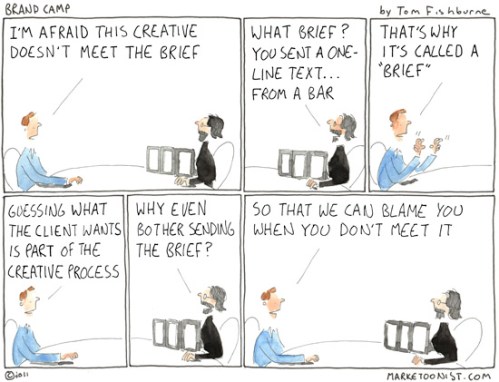
Marketing briefs are not just for advertising. They’re a statement of objectives and a plan for action that is applicable for almost everything you do in marketing. Besides advertising, I’ve written marketing briefs for market research projects, creating a new website, building a public relations campaign, developing a brand name and logo, new product marketing communications, and more.
The most important element is organizing your thoughts. Pick any format that you’re comfortable with, and keep this in mind: if someone who doesn’t know your business can read the brief and have a 360 degree understanding of what is to be done and why, you’re in good shape. My briefs are similar in organization, yet customized depending on the assignment.
As an example, here are the sections that I had in a marketing communications brief for a B2B product marketing program:
- Reason for the brief
- Communication objectives
- Communication targets
- Execution guidance and comments
- Marketing deliverables
- Geography and timing
- Tracking metrics
- Budget (always know your budget or budget range, but depending on the type of assignment, you may not want to release it on the front-end)
- Attachment with competitor information
Here are four marketing brief tips that have worked great for me:
- Don’t be afraid to get cross-functional input when preparing the brief. For example, one of my best briefs incorporated significant input from sales, product management and technical R&D teams.
- If there are key project decision-makers besides yourself, have them approve and sign the brief on the front-end. It’s always better when everyone is driving down the same road.
- Always “present” your brief in-person or virtually. There is no substitute for the personal touch.
- Encourage the marketing brief recipient to include in the briefing all the key people likely to work on the project. You want the team you are hiring or working with to hear your message directly, and learn first-hand why it’s important and why you’re excited.
Headline For Marketers
A good marketing brief can be the difference between success and failure. If you want the best chance for excellent marketing, use marketing briefs.
Harvey Chimoff is a hands-on marketing leader and business-wide collaborator who builds marketing capabilities in B2B/B2C organizations that drive customer success.

 harveychimoff.com
Leave a reply to MarketingLeader1 Cancel reply